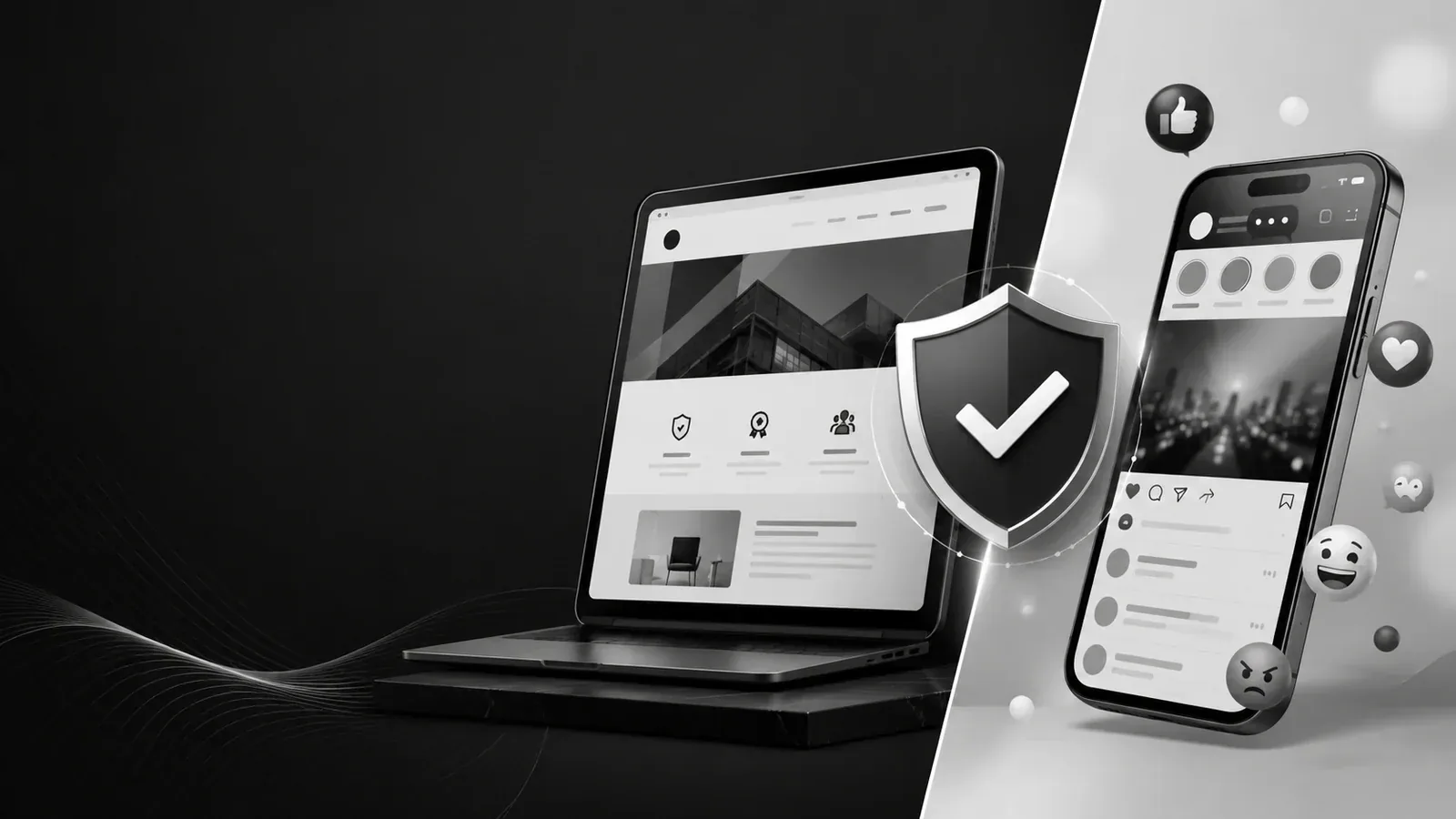
Social media is useful for attention. A website is useful for trust, clarity, and conversion. A strong business should use both, but they should not do the same job.
Many small businesses start with Instagram, Facebook, TikTok, WhatsApp, or marketplace profiles because they are fast and free. That is fine in the early stage. But when customers want to verify the business, compare services, request a quote, or understand a serious offer, a professional website creates a stronger impression.
Social media is good for reach
Social media works well for short updates, quick visuals, promotions, community interaction, and brand awareness. It helps people discover you while they are already scrolling.
The weakness is control. You do not control the feed, algorithm, layout, data access, account rules, or long-term visibility of old content. A post that performed well today can disappear tomorrow. Important information becomes buried under newer posts.
A website is good for decision-making
A website lets you guide customers through a clear journey. You can explain the problem, show the solution, answer objections, display proof, and provide a direct action such as contact, booking, purchase, or project request.
That structure is hard to create inside a social profile. A serious customer does not want to scroll through months of posts to understand your services. They want a clean page that answers their questions quickly.
Trust signals a website can provide
- A custom domain and professional brand identity.
- Clear service pages with detailed explanations.
- Privacy policy, terms, refund policy, or project process.
- Case studies, testimonials, portfolio, and FAQs.
- Secure contact forms and spam protection.
- Professional email and consistent business information.
- Analytics to understand what customers actually do.
Where social media can still help
Social media should send people to your website when they need details. A good strategy looks like this:
- Social media creates awareness.
- The website explains the service clearly.
- A form, chat, or call button converts the visitor.
- Email or support tools continue the relationship.
Which one should be your main digital home?
Your website should be your main digital home. Social media should be a traffic and communication channel. This gives your business control over its content, search presence, customer journey, and long-term brand value.
A social page helps people notice you. A website helps people trust you.
Recommended setup for a small business
- One professional website with clear service and contact pages.
- One or two active social platforms where your audience already spends time.
- Consistent branding and contact details across all channels.
- Social posts that link to useful website pages instead of repeating everything.
- Blog or guide content that answers buyer questions and supports search visibility.
For serious growth, do not choose between website and social media. Use social media for attention and your website for trust, clarity, and conversion.
Useful resources
Need help building this properly?
A professional website should not only look clean. It should load fast, explain the business clearly, collect leads, protect users, and be easy to manage from the admin panel.
a2tdev can help you design, build, secure, and maintain a production-ready website, support system, or custom business platform.
Continue the conversation.
Questions, useful additions and thoughtful disagreement are welcome. Keep replies relevant to the article and useful to other readers.
↑ Back to articleSign in to contribute.
The published discussion remains readable without an account.
Sign in →